Career Fair Preparation That Maximizes Every Employer Conversation
Career fair preparation strategies including research, elevator pitches, booth conversation tactics, and follow-up systems for landing interviews.
Anúncios
Why Most People Waste Their Time at Career Fairs
The typical career fair attendee wanders from booth to booth, hands out generic resumes, and leaves without meaningful connections. This approach fails because recruiters meet hundreds of candidates per event and remember almost none of them. Standing out requires preparation that 90% of attendees skip entirely.
How Do You Research Companies Before the Fair?
Anúncios
Get the exhibitor list (usually published a week before) and identify your top 10 target companies. For each, research current openings, recent news, and challenges in their industry. Prepare one specific question per company that demonstrates knowledge beyond their website homepage.
Prioritizing Your Booth Visits
Visit your top three targets first while your energy is highest and lines are shortest. Schedule high-priority visits for the first hour when recruiters are fresh and eager to engage. Leave lower-priority booths for later when you've built conversational momentum.
Anúncios
What Should Your Elevator Pitch Include?
Structure it as: who you are, what you do best, and what you're looking for. 'I'm a data analyst with three years of experience building forecasting models in retail logistics. I'm particularly interested in your supply chain optimization team because of the work you published on demand prediction.' Under 30 seconds, specific to each company.
- Research 10 target companies and their current openings before attending
- Print 30 copies of your resume on quality paper — more than you think you need
- Prepare a 30-second pitch customized for your top three companies
- Bring a portfolio or tablet with work samples if relevant
- Wear professional attire and comfortable shoes for standing
- Carry a pen and small notebook for jotting recruiter names and notes
What Questions Impress Booth Recruiters?
'What skills set apart the candidates you advance from career fairs?' shows you're strategic. 'What does onboarding look like for new hires on the [specific] team?' shows commitment. Avoid asking questions answered on their website — it signals you didn't prepare.
How Long Should Each Booth Conversation Last?
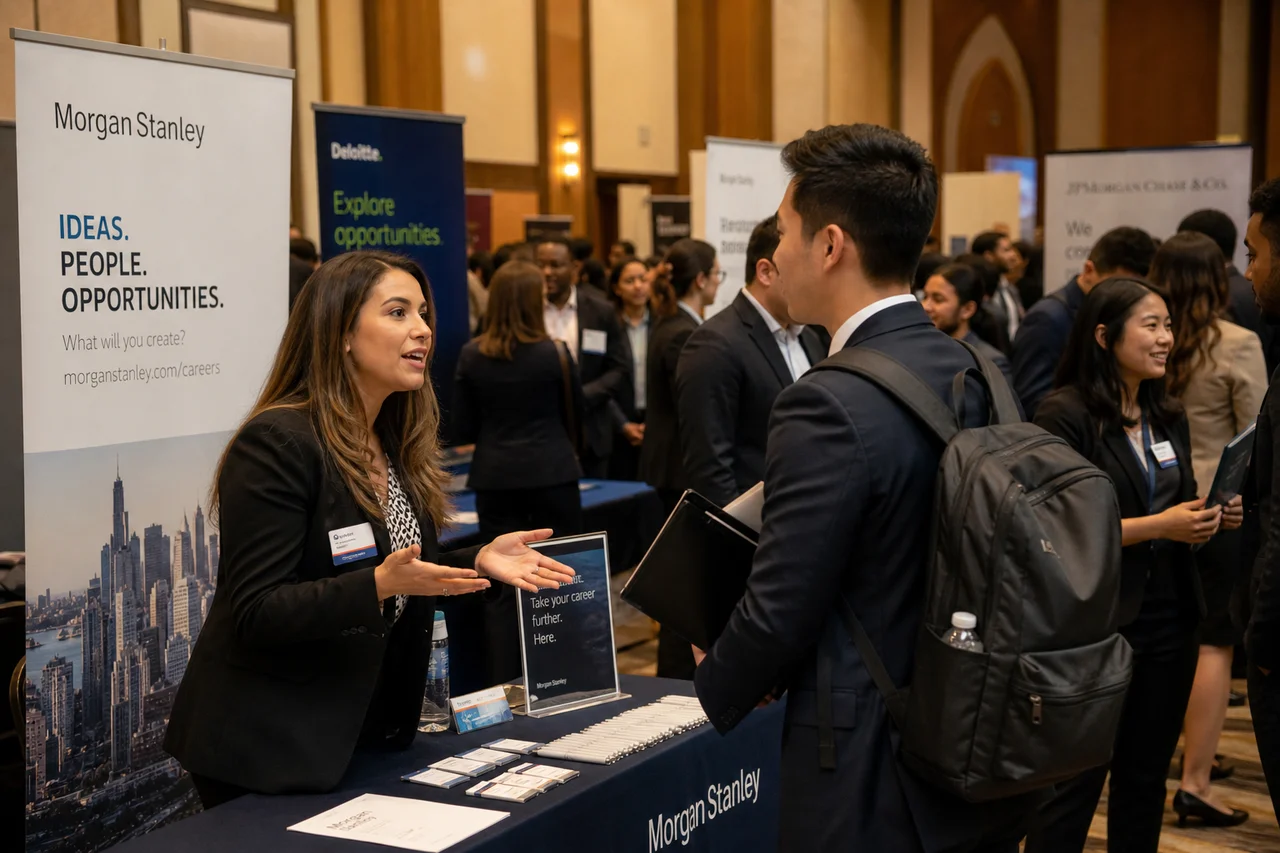
Two to four minutes is the sweet spot. Enough time to make an impression and ask a meaningful question, but not so long that you monopolize the recruiter's time when others are waiting. End by asking for their contact information and permission to follow up directly.
Should You Bring Anything Besides Resumes?
A professional bag or folio, business cards if you have them, and a tablet or phone with portfolio samples ready. Some candidates bring one-page project summaries highlighting their most relevant work. These leave-behinds help recruiters remember you among hundreds of similar conversations.
How Do You Handle Long Lines at Popular Booths?
Use wait time to observe other conversations and refine your approach. If a line exceeds 20 minutes, visit less popular booths first and return later. Some of the best opportunities come from lesser-known companies whose booths you visit when they have time for deeper conversations.
What Happens After the Career Fair?
Within 24 hours, send personalized emails to every recruiter you spoke with. Reference your specific conversation: 'We discussed the analytics team's expansion during yesterday's career fair. I'd love to learn more about the open position and how my forecasting experience at [company] could contribute.'
Are Virtual Career Fairs Worth Attending?
Yes, particularly for remote roles and companies not in your geographic area. Virtual fairs allow you to review company profiles in advance, prepare more thoroughly, and participate in chat-based conversations that play to written communication strengths.
How Often Should You Attend Career Fairs?
Two to three per year during an active search. One industry-specific fair plus one or two general fairs covers the broadest range of employers. Attendance produces diminishing returns beyond that unless you're targeting fundamentally different industries.
What should I wear to a career fair?
How many resumes should I bring?
Should I apply online AND speak at the booth?
What if I'm not qualified for their open roles?
Can career fairs lead to same-day interviews?
Treating Career Fairs as Part of a Bigger Strategy
A career fair is one touchpoint in a longer relationship-building process. The conversation at the booth starts the connection. The follow-up email deepens it. The application through their portal formalizes it. And the LinkedIn connection maintains it. Each step matters, and skipping any one reduces your odds significantly.